

Courtney Campbell Causeway


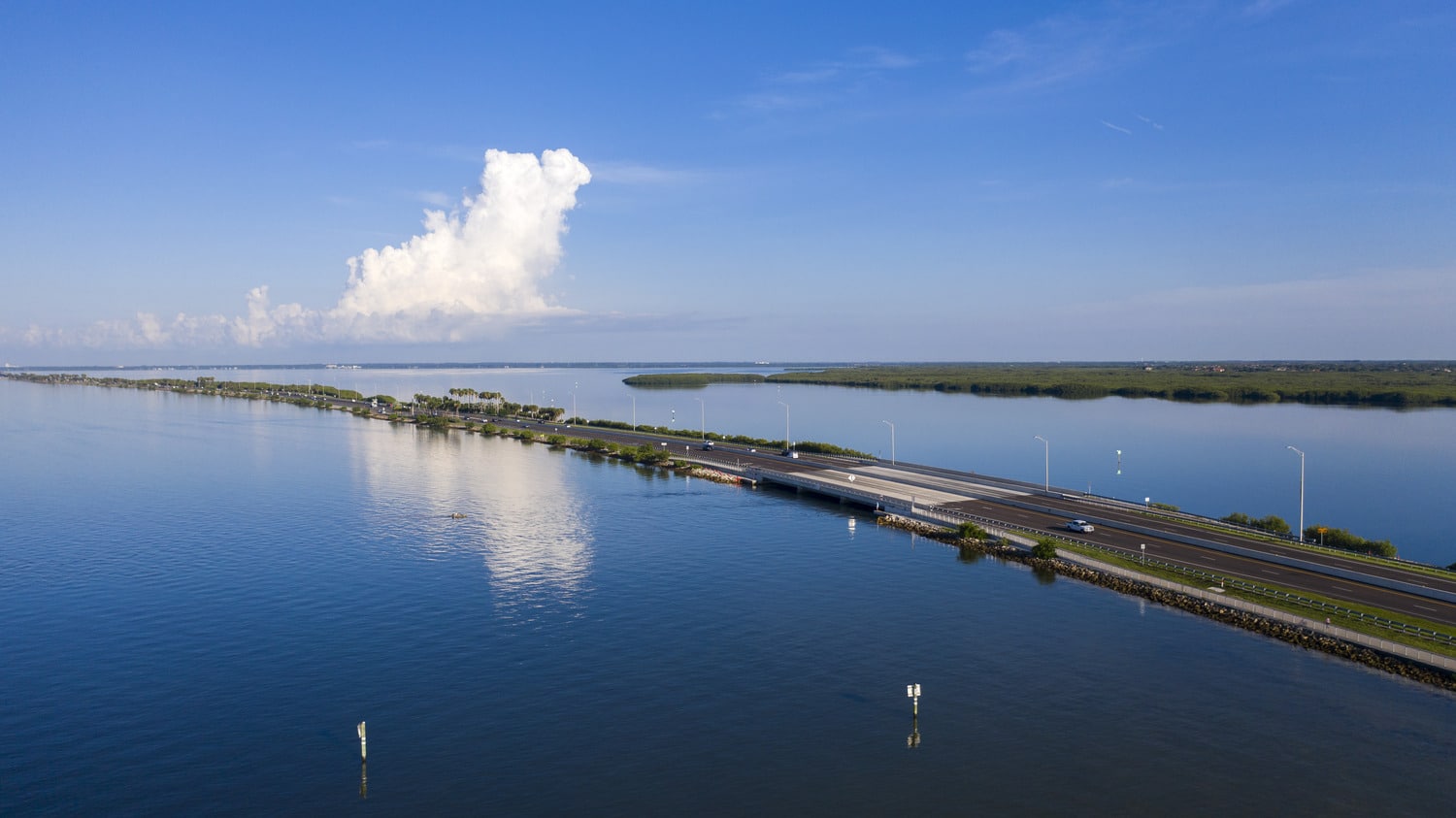
For years, Old Tampa Bay experienced poor water quality due to limited tidal circulation caused by the Courtney Campbell Causeway. Stormwater runoff and pollutants became trapped north of the causeway, leading to algal blooms, reduced water quality, and declining seagrass habitats. While much of Tampa Bay had benefited from successful environmental restoration efforts, Old Tampa Bay continued to suffer from impaired water quality and ecological conditions. Recognizing the need for a regional solution, the Florida Department of Transportation (FDOT) initiated the Water Quality Improvement Project to restore natural tidal flow and improve environmental conditions throughout the bay.
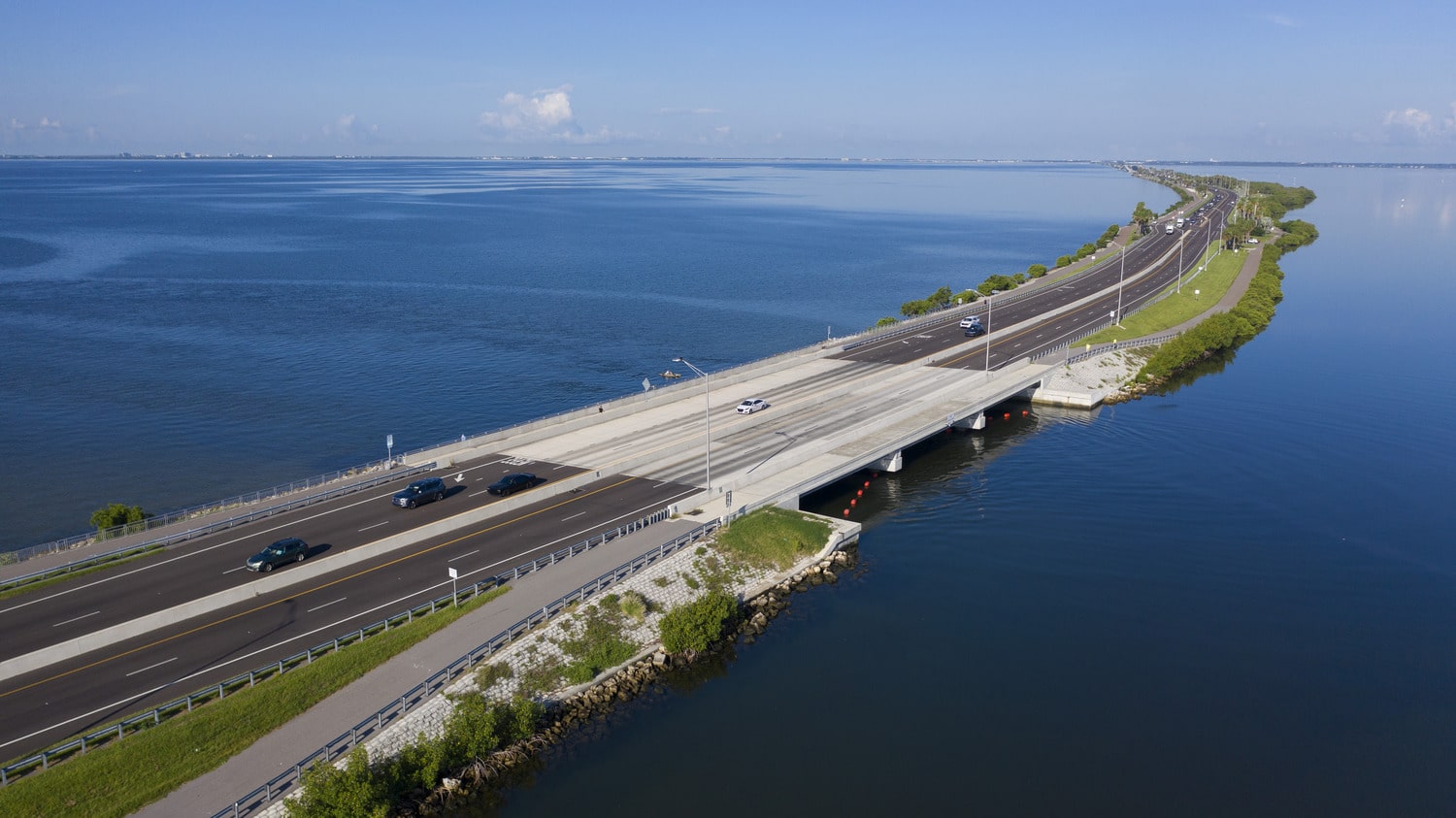
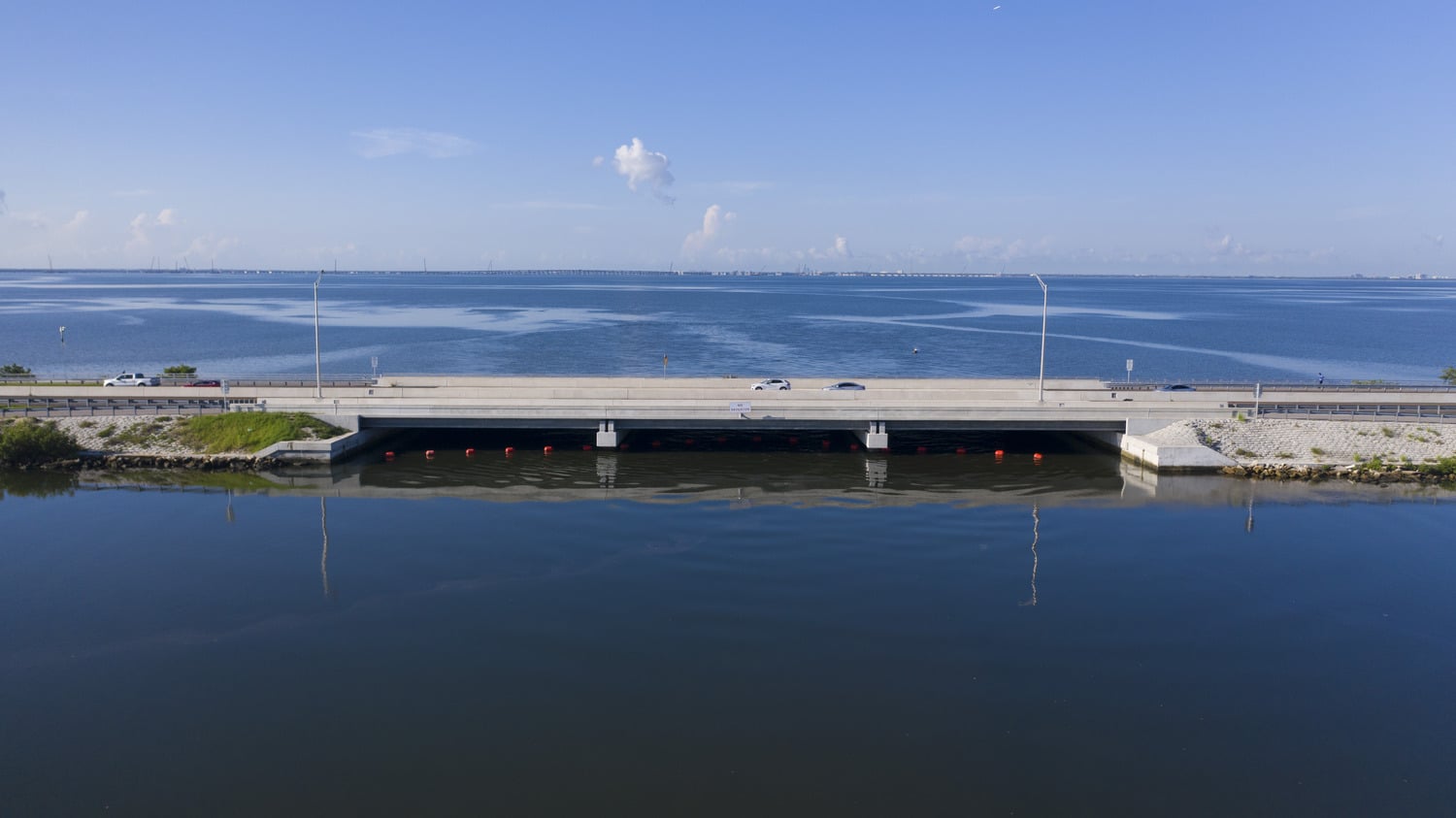
FDOT selected the Design-Build team of Volkert and Johnson Bros. Corporation to develop a solution that would improve water circulation and support habitat restoration. Volkert provided engineering design services for a bridge opening through the Courtney Campbell Causeway that would reconnect tidal flows between the northern and southern portions of Old Tampa Bay. The project was designed to improve water quality, reduce pollutant residence times, and create conditions favorable for seagrass recovery.
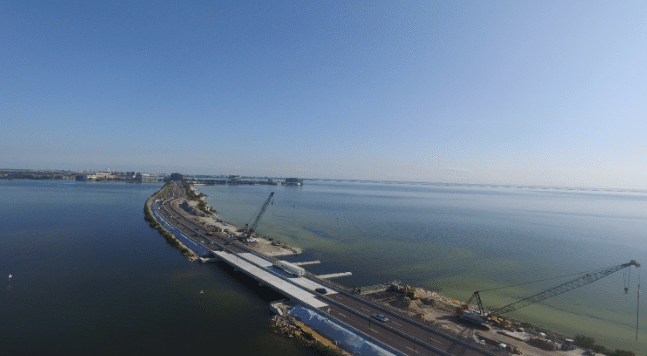
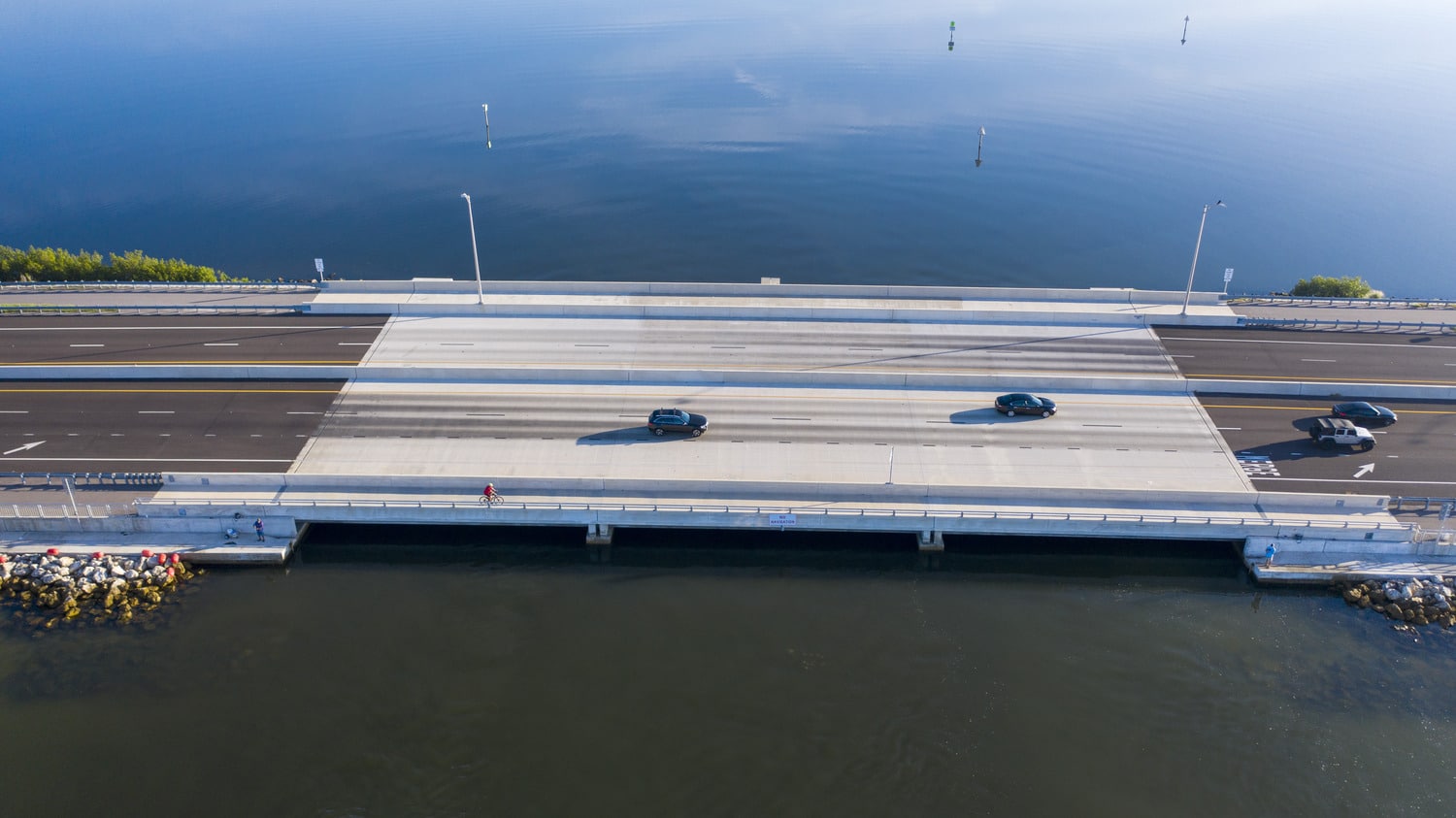
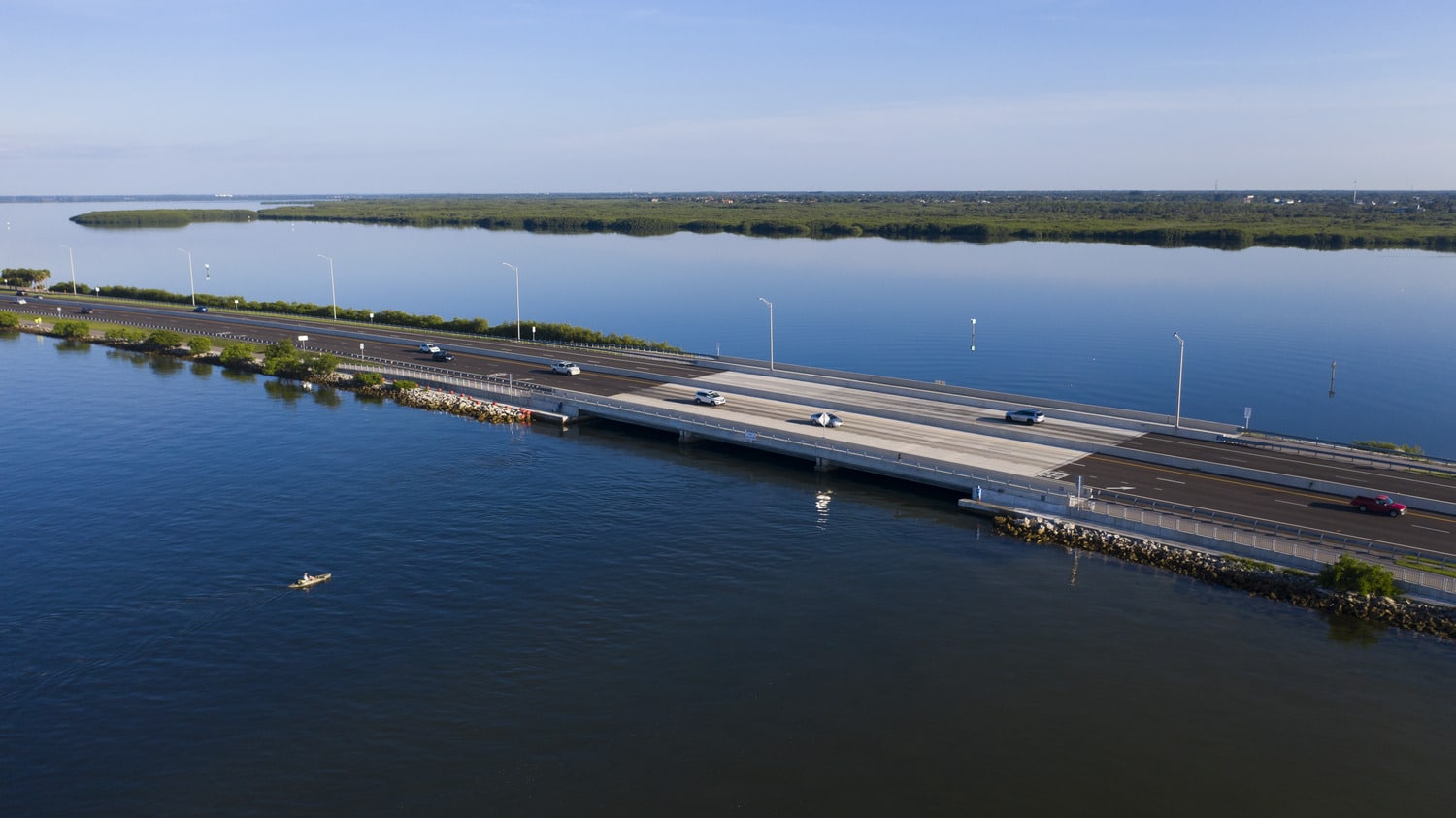
Advanced Delft3D hydrodynamic modeling was used to evaluate multiple bridge opening alternatives and determine the optimal design for improving tidal exchange. Based on the modeling results, Volkert designed a 229-foot bridge structure that replaced a portion of the existing causeway, creating a new tidal flow channel. Volkert also provided transportation, hydraulic, environmental, and traffic engineering services to ensure the bridge successfully balanced environmental improvements with the transportation needs of one of Tampa Bay’s busiest corridors. Innovative construction methods, including environmentally sensitive cofferdam systems and phased traffic-control plans, minimized impacts to surrounding habitats while maintaining vehicle and pedestrian access during construction
Construction began in January 2018 following an accelerated four-month design phase and was completed in July 2019. The tidal channel was opened in November 2018, allowing water to begin circulating before final bridge completion. Since opening, monitoring has shown significant improvements in water quality, tidal flushing, salinity, and seagrass habitat conditions. The project has become a model for using transportation infrastructure to achieve regional environmental restoration goals.
The award-winning project demonstrated how restoring natural tidal processes can provide long-term ecological benefits while improving water quality throughout Old Tampa Bay.
Location
Tampa, Florida
Client
Florida Department of Transportation